The Autograph Gallery to see – Abi Morocco Photos: Spirit of Lagos
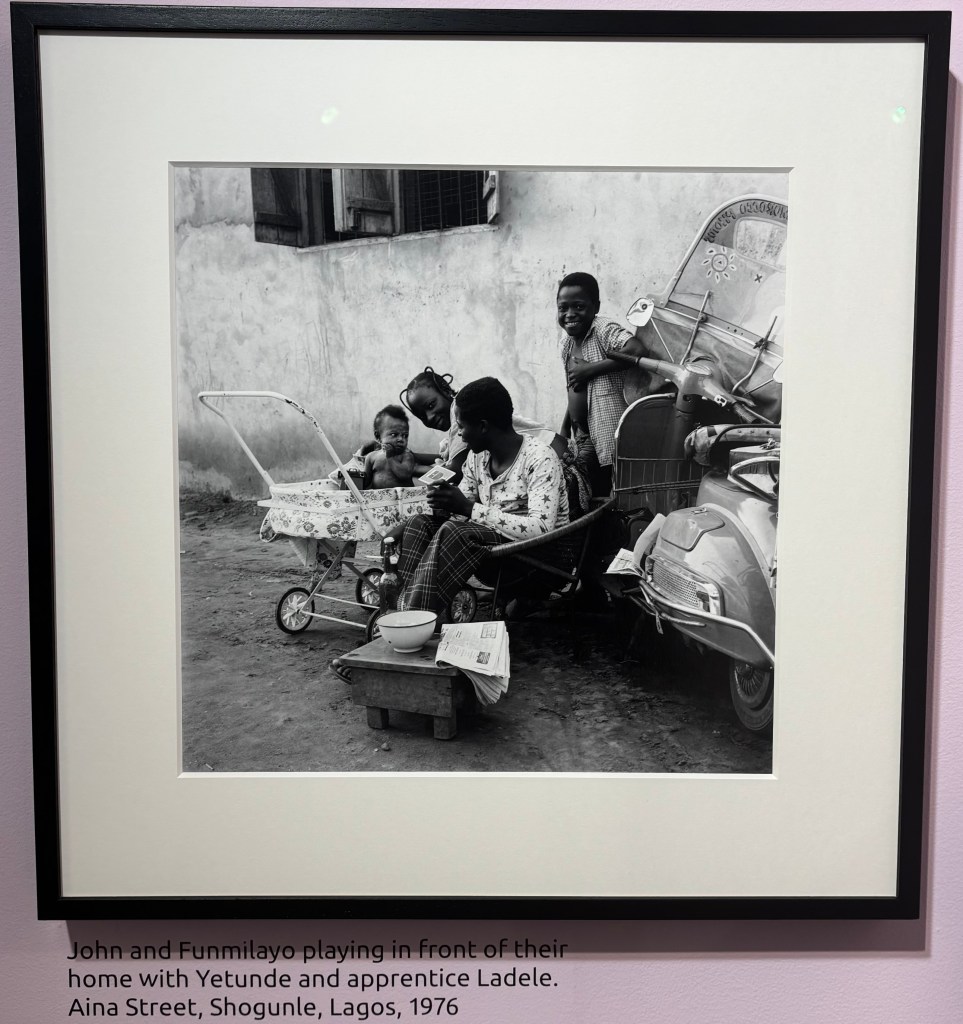
John and Funmilayo playing in front of their home with Yetunde and apprentice Ledele. Aina Street, Shogunle, Lagos, 1976
This picture by Lagos was most likely taken with a film camera, and a small aperture of F22-32 achieves a great depth of field, which means every part of the picture, from the subjects to the background, is in focus. The point of view and the symmetrical composition are both very spontaneous, and the eye-level shooting makes for a very private and unposed scene, effectively showing the people’s relation to their environment. The natural light makes the grayscale tones pop out and bring out the materiality of objects and the depth of the image, while the lines of the stroller, scooter, and building formation lead the eye of the viewer. These elements, in combination, tell a story of family life and community in the 1970s in Lagos, place the subjects in their socio-cultural context, and make them seem honest and friendly.
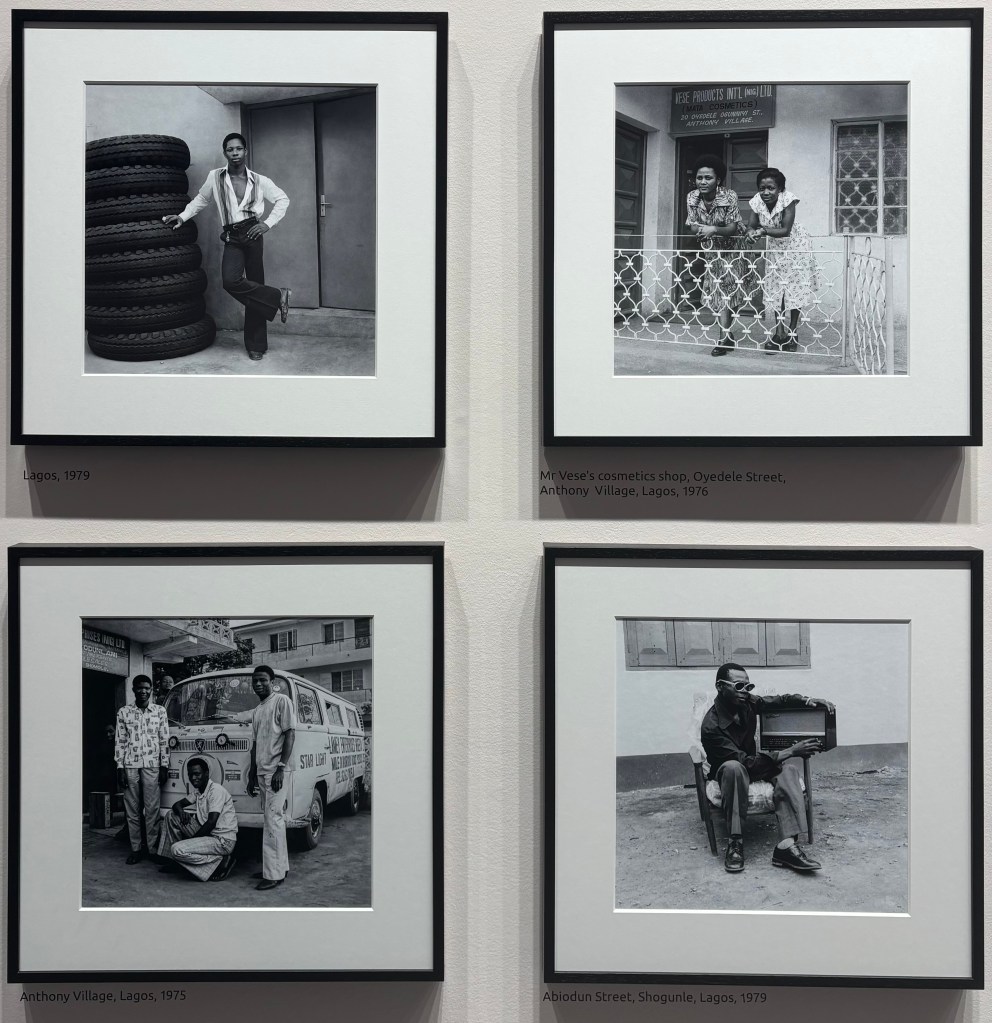
This series celebrates the joyful, proud, and individualistic spirit of the Lagosians during the stratum of change in the socio-economic fabric of Nigeria during the oil boom of the 70s. It is a testimony to the spirit of identity and ambition and a documentation of how people stepped before the camera and how they wanted to be remembered. It also emphasizes the role of studio portraits in preserving the culture and how Abes’ photographs were a chance to create art and new identities in the modern world. In addition, it features themes of liberation, resilience, and reimagining.
The accompanying written information dramatically affects the perception of the images. At first, the photographs seem to be regular portraits of people and families, but knowing about John and Funmilayo Abe’s studio and the subjects’ personal stories changes the perception. The knowledge that the portraits were created as part of a collaborative husband-and-wife effort while succeeding in a male-dominated field and maintaining a balance with family life makes the images of resilience, partnership, and cultural conservation.
 Photography In London